
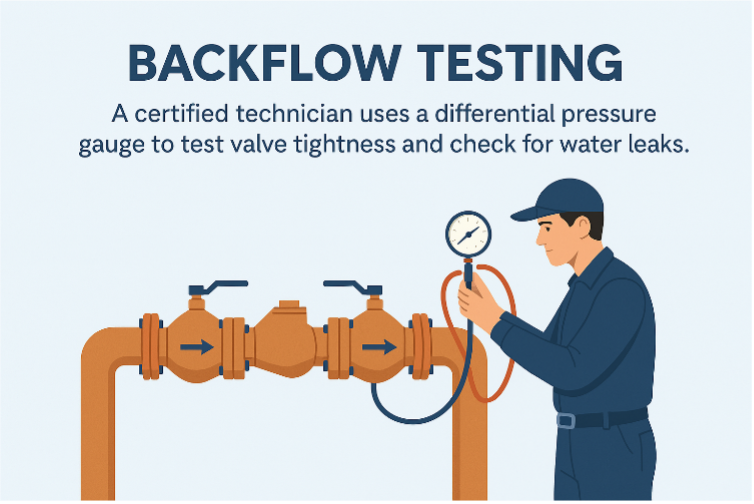
 Backflow testing is essential for protecting your clean, potable water supply. When a backflow prevention assembly isn’t working properly, non potable water can reverse direction and enter the drinking water system—creating serious health and safety risks. Our certified technicians provide accurate, compliant testing to ensure your system is working exactly as it should.
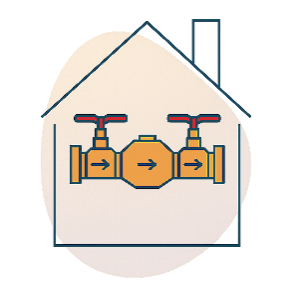
Backflow testing confirms that your backflow prevention assembly—such as a Reduced Pressure (RP) or Double Check (DC) device—is preventing contaminated or non potable water from flowing back into your clean water supply. These assemblies are designed to maintain proper pressure and valve function, but they must be tested regularly to ensure they’re performing correctly.
Most local water authorities require backflow testing every year for commercial, industrial, and certain residential properties, including homes with irrigation systems.
What to Expect With Our Backflow Testing
A certified technician uses a differential pressure gauge to measure the performance of the assembly. During the test, the technician:
- Attaches a specialized gauge to the device’s test ports
- Verifies the pressure differential between check valves
- Tests valve tightness to confirm proper sealing
- Checks for water leaks or component issues
The process is precise, controlled, and performed according to local code requirements.
Testing Requirements
For testing to be completed correctly, a few conditions must be met:
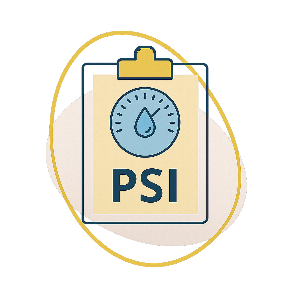
- The assembly must have at least 15 PSI of water pressure
- The device must be fully accessible
- There must be 3–4 inches of clearance around the valve
- Test ports must be unobstructed for gauge attachment
If the unit isn’t accessible or pressure is insufficient, the technician will provide guidance on what needs to be corrected.